

“Coreform Cubit gave us control over mesh size on individual surfaces and volumes. We could put very fine tetrahedral elements near the conducting edge and use larger elements farther away. That gave us the reference data we needed to test whether singEM could reproduce the singular electric field on a much coarser mesh.”
Thomas Roth
Assistant Professor of Electrical and Computer Engineering
Elmore Family School of Electrical and Computer Engineering, Purdue University
Researchers in Purdue University’s Computational Quantum Electromagnetics group used Coreform Cubit to generate a tetrahedral reference mesh for an electromagnetic simulation of a superconducting qubit. By setting mesh sizes on individual surfaces and on a series of nested cylindrical volumes, they concentrated fine elements near a sharp conducting edge and increased element sizes farther away. This gave the team a reference for testing whether its open-source solver, singEM, could reproduce the electric field near the edge on a much coarser mesh.
Background
The Computational Quantum Electromagnetics (CQEM) group at Purdue University, led by Prof. Thomas Roth, is focused on developing specialized numerical tools for supporting the design process of superconducting quantum computers. One of the lab’s recent projects is the open-source singularity-enriched finite element method (FEM) solver singEM. This solver uses specialized singular basis functions to enable accurate and efficient extraction of critical properties of these quantum bits (qubits) related to predicting their coherence times. This can vastly reduce the time and memory required to determine these quantities, which can enable the development of much more effective qubits through geometry optimization.
Problem
To validate the singular basis functions, the researchers wanted to plot the electric field in detail near the kinds of singular features found in superconducting qubit geometries. Generating those plots without the singular basis functions required an extremely fine mesh near the features. The team also needed precise control over how quickly element sizes increased away from them so the total element count stayed within its available computing resources.
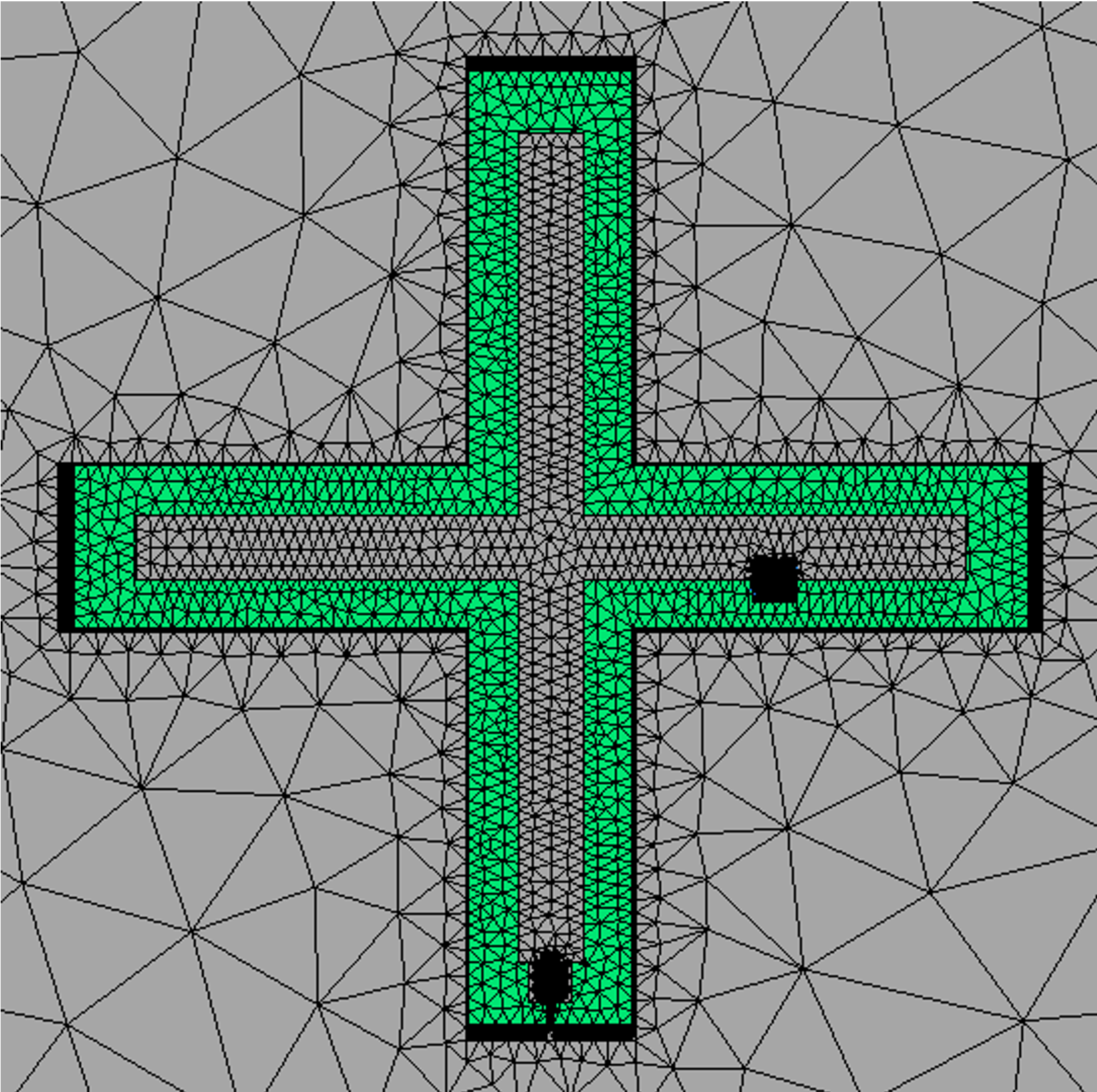
Figure 1: Cross-section of the transmon qubit geometry used to validate singular basis functions. The grey regions are perfect electric conductor (PEC) volumes with 30 µm thickness, and the green area is the exposed substrate.
Solution
To generate the fine mesh, the researchers used Coreform Cubit to specify mesh sizes on individual surfaces and volumes. Cubit’s tetrahedral meshing tools let them transition between regions with very different element sizes. The team created nested cylindrical volumes, with finer elements in each successive cylinder closer to the edge (Figures 2 and 3). This approach gave the researchers control over how quickly element sizes increased away from the edge, allowing them to model the singular behavior accurately without an excessive number of elements.
Superconducting qubit geometries often contain features that are very small relative to the overall geometry, so element sizes can vary substantially across the model. The researchers found that tuning mesh sizes on specific surfaces and volumes in Cubit made these geometries easier to mesh.
Meshing time was not a major constraint for this project. Obtaining a high-quality mesh under the required sizing constraints was critical to producing useful reference data for validating the singular basis functions.
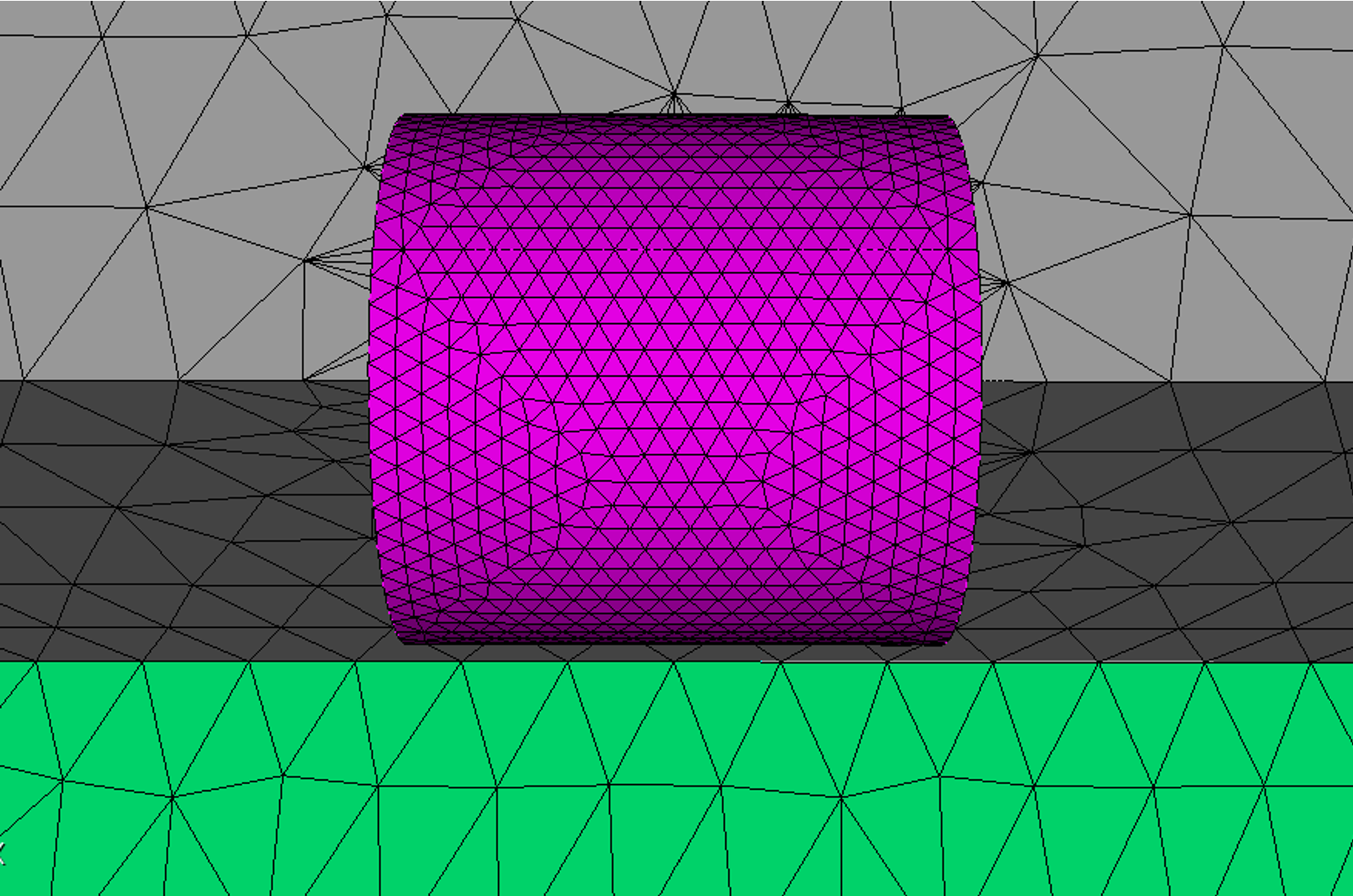
Figure 2: The outer cylinder in the set of nested cylinders used to produce an extremely fine mesh along the sharp conducting edge, which is used to capture the singular behavior in the region.
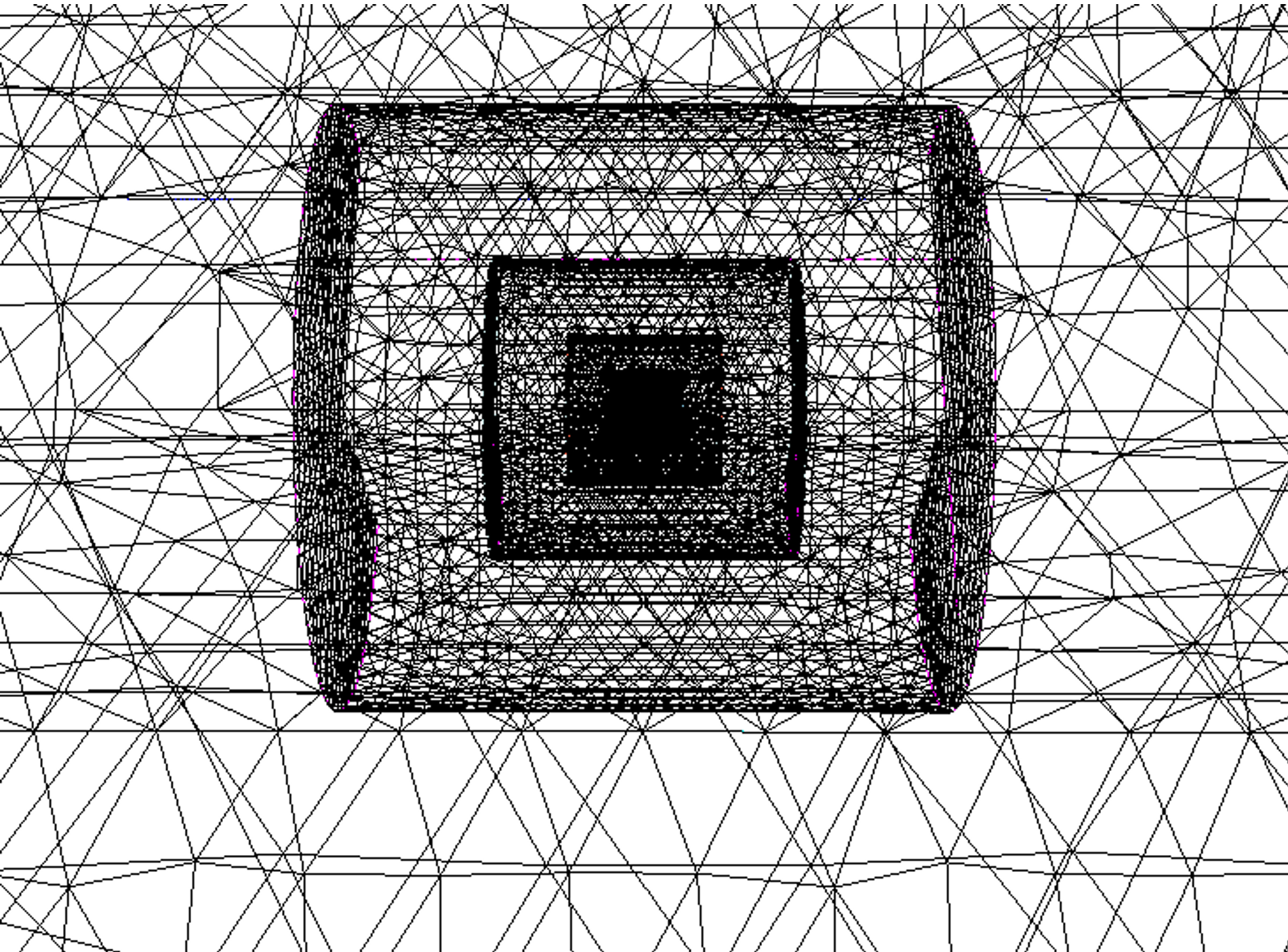
Figure 3: Hollow view of the set of nested mesh cylinders. These meshing objects are used to rapidly increase the mesh density closer to the edge.
Workflow
The researchers generated the geometry and meshes in Coreform Cubit and exported them as Exodus files. The team imported those files into singEM using the netCDF4 package and used the mesh to set up and evaluate the electromagnetic problems. After assembling the finite element matrices, the team used PETSc to solve the linear system and ParaView to visualize the results.
Results
The team checked the fine reference mesh and confirmed tetrahedral edge lengths as small as 0.2 nanometers (nm), meeting its target near the conducting edge. The researchers obtained accurate electric field data within 50 nm of the singular feature, allowing them to validate the singular basis functions. Figure 4 compares the field behavior in the directions the team tested. The fine reference mesh used 597,471 tetrahedra in the cylindrical region, while the coarse mesh used with the singular basis functions had 39 tetrahedra in the equivalent region.
More details about the singular basis functions and this test are available in the research preprint.
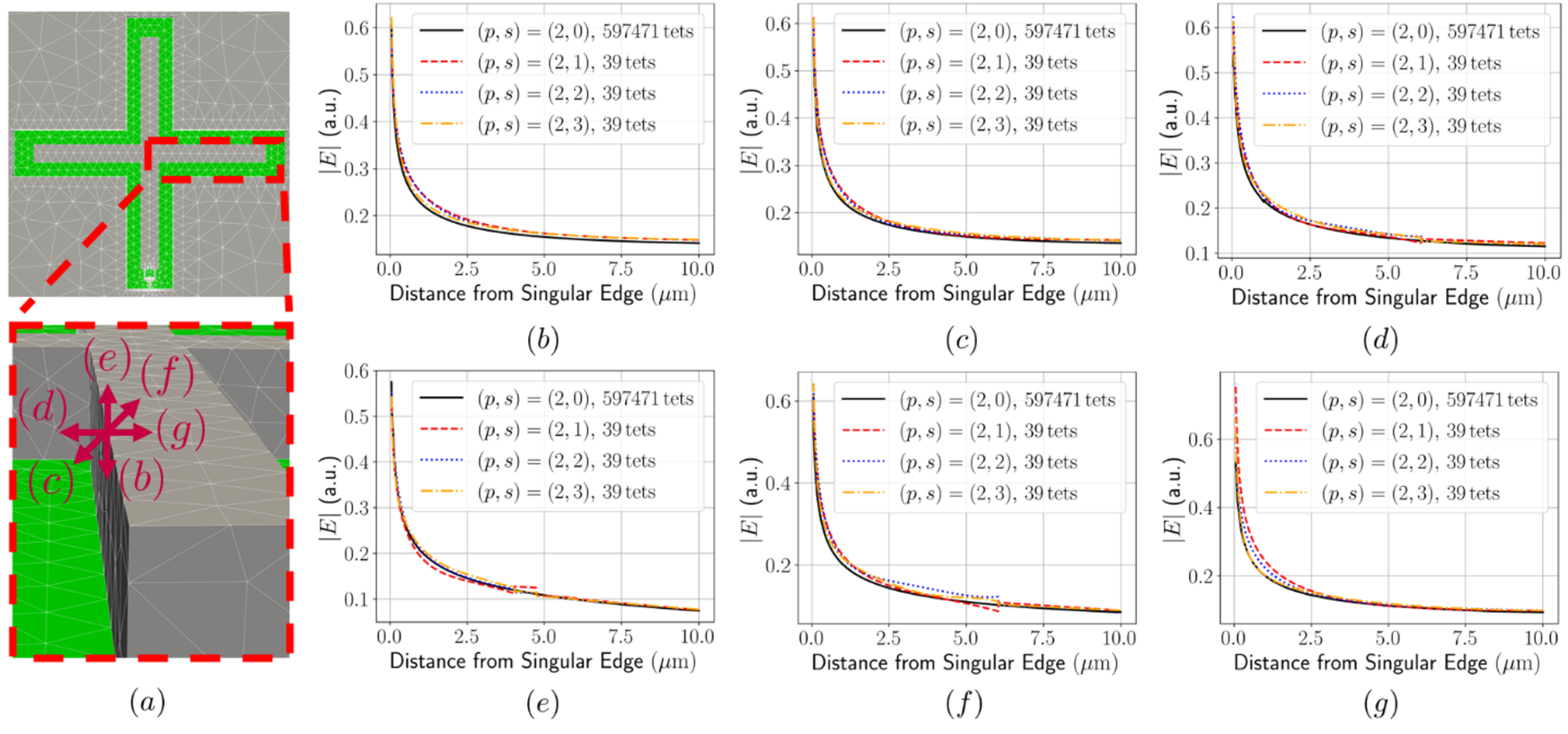
Figure 4: Electric field behavior from the fine reference mesh and a much coarser mesh using singular basis functions. The labels p and s indicate the orders of the standard and singular basis functions, respectively. The tetrahedron counts apply only to the cylindrical region, or to its equivalent in the coarse mesh.
Conclusion
Coreform Cubit gave the Purdue team the control over mesh density it needed to resolve the electric field within 50 nm of the conducting edge while keeping the simulation within its available computing resources. The fine mesh provided reference data for validating the singular basis functions in singEM. In the directions the team tested, the higher-order functions reproduced the near-edge field behavior on a much coarser mesh.